
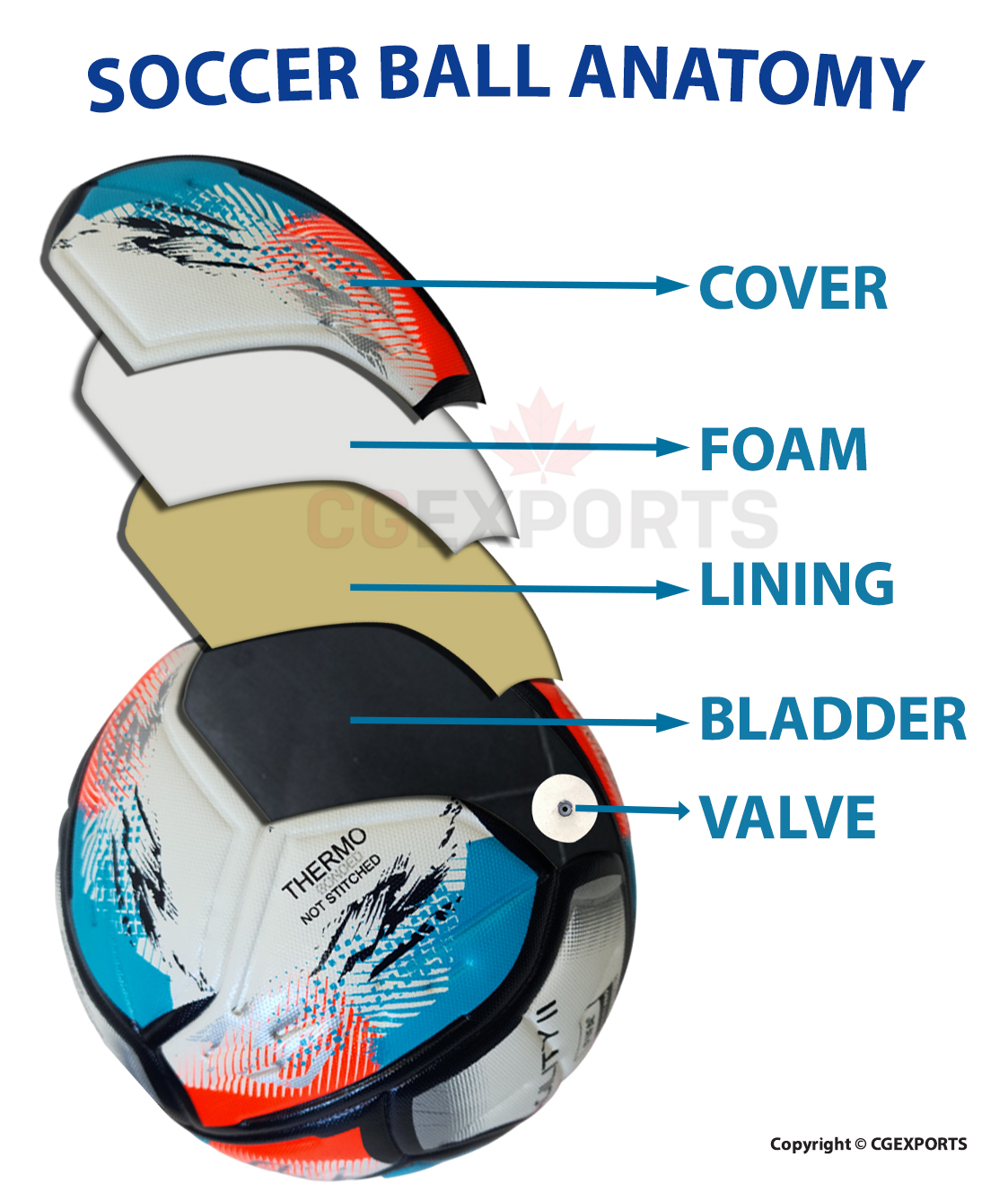
SOCCER BALL CONSTRUCTION MATERIALS & ANATOMY​​

1. Outer Cover

This is the outside surface of the ball.

Types of Covers

  • PU (Polyurethane)

    • Soft, premium touch

    • Great grip and control

    • Best for match and professional balls

  • PVC (Polyvinyl Chloride)

    • Harder feel

    • Strong and durable

    • Best for recreational or low-cost balls

2. Foam Layer

Foam sits under the outer cover and completely changes the comfort level of a soccer ball.

Benefits of Foam

  • Adds softness to every touch

  • Makes the ball more comfortable for passes, shots, and headers

  • Improves control and confidence

  • Great for younger players and long training sessions

Safety Benefit

⭐ Foam reduces impact force, which helps reduce strain on wrists, ankles, knees and head
3. Inner Lining

The lining sits between the bladder and the outer cover.
It helps the ball keep its shape and affects softness and responsiveness.

Materials

  • Cotton → softer, more cushioned feel

  • Polyester → stronger structure and durability

Number of Layers

  • 1–2 layers (0.5 – 1 mm) → basic / recreational

  • 3–4 layers (1 – 3 mm) → training + match

  • 4+ layers (3 – 4 mm) → premium / professional

More layers = better shape, feel, and strength.

4. Bladder (Air Chamber)

The bladder is the inner part that holds the air and creates bounce.

Types of Bladders

  • Synthetic Rubber (SR)

    • Used in basic training balls

    • Good air retention

    • Firm feel

  • Butyl

    • Used in training and match-quality balls

    • Excellent air retention

    • Very durable

  • Latex

    • Preferred for professional play

    • Needs more frequent air refills

    • Softest and most responsive

Quick Tip:
If you prefer less pumping → Butyl
If you want the best performance + softest touch → Latex

5. Valve

The valve controls air entry and helps the ball maintain pressure.

Types

  • Butyl Valve

    • Common

    • Reliable air sealing

  • Silicone Valve

    • Used in higher-end balls

    • Soft and flexible

    • Helps latex bladders keep air longer

6. Stitches or Bonding Material

  • Polyester Thread → durable and widely used

  • Kevlar Thread → stronger and better water resistance

  • Bonding Glue → used in modern bonded balls for a smooth finish and high water resistance

Quick Summary

Recreational Balls

  • SR or Butyl bladder
  • 1–2 lining layers
  • PVC cover

Training Balls (Most Popular Category)

  • Butyl bladder

  • 3–4 lining layers

  • PU cover

  • Foam layer recommended (better comfort + lower joint impact)

Match & Professional Balls

  • Latex or high-grade butyl bladder

  • 4+ lining layers

  • Premium PU cover

  • Silicone valve

  • Advanced foam for soft touch

Shopping Cart